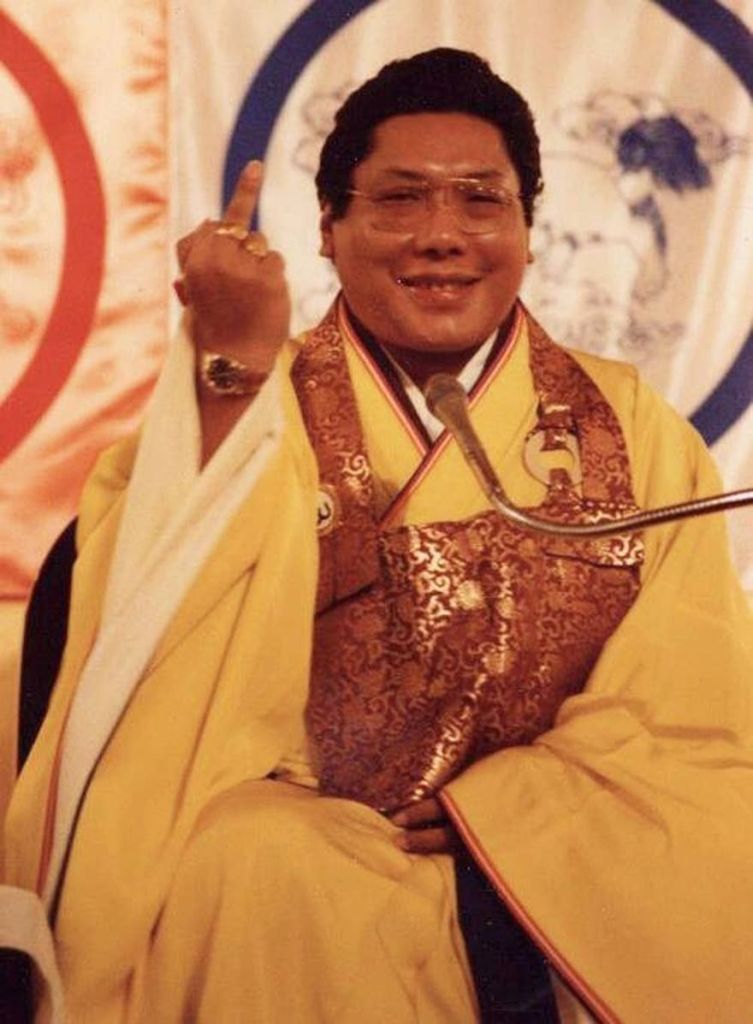
Directly below is an exert from a compilation of Seminary Transcripts from a 1981 gathering of Buddhist Meditation Practitioners in the Canada Hinayana-Mahayana – By Chogyam Trungpa, Rinpoche

From Chapter One – How to Tame The Mind
Buddha said that the dharma altogether should be an antidote for desire. Therefore it should be known as vinaya, which literally means “taming“. (Sanskrit spelling is usually like Spanish; it’s very basic and very literal. The spelling is almost the same as in Latin, actually.) Desire is anything that causes us to look for something other than what we perceive normally. Normal perception here means just a simple business affair – seeing red, seeing green, seeing white, or drinking a hot cup of tea – as opposed to anything that helps us to cure our pain, ease our loneliness, fulfill our desire, our passion, our aggression, or whatever. So vinaya means “taming.”
Therefore sitting practice is known as the practice of taming – taming ourselves.
The Tibetan word for vinaya is dulwa (‘dul.ba), which we have discussed before. You should learn a little bit of Tibetan and a little bit of Sanskrit while you are here. That will help you to understand the subtleties of the words. If the whole thing is already translated completely, that leaves you completely at the mercy of the translator. When you listen to various different speakers, sometimes you don’t know which words they are actually translating, and you probably misunderstand some of them. Beyond that, you don’t have a feeling for the literal meaning of the words and where the original concepts came from. So it will be necessary for you to learn a little bit of Tibetan and Sanskrit at this point; that would be good. Previous seminarians have tried to do that, and they seemed to do all right, so maybe you too could do alright.
So, on the basis of vinaya, dharma means taming the mind and being free from desire. Where did desire come from? What is it that has to be tamed? Mind has to be tamed, and desire is sort of the excess baggage of mind, which has to be looked at and worked with. Therefore we are talking about working with the mind. In the morning, we chant the four Dharmas of Gampopa. The first one – How does it go in the new translation?
Student: “Grant your blessing so that my mind may be one with the dharma.”
Vajracarya: Our mind becomes one with the dharma. That is to say, whatever we think – any flicker of thought that occurs – could become a dharmic thought. That is why we have to practice meditation: so that our minds could be like that.
We don’t have to say, “Now i’m being bad and now I’m being good. I can switch on to being wicked or I can switch on to being good.” We have had a lot of problems with that in working with the business world, including our sangha of business people as well. When sangha members do their practice, that are perfectly good people, but when they go to the office, they begin to switch off; they become regular hard-core, wicked Americans. [Laughter] That is why they lose their business deals. In turn they lose their business, in and then they have to declare bankruptcy and so forth and blah blah blah. In fact, when people switch on and off like that, they aren’t actually earning their business; and it’s bad for business, as well. You can’t do business on neurosis, it seems – fortunately for us Buddhists, at least.
If our mind has become dharmically oriented already, naturally, then we begin to think dharmically. What is the dharmic way of thinking? Thinking dharmically doesn’t mean that you always think religious thoughts. It doesn’t mean that you become a holy person, necessarily, but you become a mindful person. You watch every step that happens to you. That is what we are trying to do here. We are not particularly saying that you should become a holy man or a holy women while you are here, or that you should become a monk or a nun after you leave the seminary. We are talking in terms of being decent gentleman and ladies of the world.
Being dharmically oriented, being a decent person, is not necessarily based on the protestant ethic alone. It’s a somewhat natural ethic: You don’t do certain things at the wrong time or in the wrong way, and you don’t mix good and bad together. You have a sense of respect for the rest of the world, as well as for your own mind and body and their synchronization. You also have respect for your family – your wife and you children, if you have any – and so forth. That seems to be the basic point of one’s mind being dharmic, which is the first dharma of Gampopa.

-Composure and Taming the Mind –
A reflection on the above exert from 1981 Seminary Transcripts
The taming of ones wildness is a process, it can be a powerful and creative force. Harnessing ones mind with composure, allows one to direct there internal power with restraint, rather then being at the whim of the unbridled chaos and complete wildness. Experiencing the process of taming the mind can feel like losing ones freedom, but that perceived freedom might be more like a pool of chaos that one is sourcing from, rather than a free self. The taming of the mind may be more like earning freedom. Instead of a loss of freedom, the taming of the mind may be finally gaining ones power.
The speaker eludes to normal perception;
“Desire is anything that causes us to look for something other than what we perceive normally. Normal perception here means just a simple business affair – seeing red, seeing green, seeing white, or drinking a hot cup of tea”
The mundane is normal, drinking a hot cup of tea is normal. But reality can be very, very strange as well and strange is also normal. The desire for reality to not be as strange as it is, is delusional. Remaining composed through the strange, the bizarre and through what may be perceived as assaultive to ones mind is what meditation practice allows an individual to do. The taming of the mind allows for clarity, and there is a strangeness to clarity that is uncomfortable.
The desire for wildness, for release, for joyful recklessness arises as one approaches the taming of the mind. The mind generally does not want to suffer, and there is cessation in a tamed mind. But wildness is young and fun, and getting what one desires is intoxicating, and seductive, and powerful in its own right. But obtaining what one desires does not last, and this impermanence, the losing or letting go of something, usually evokes some form of suffering.

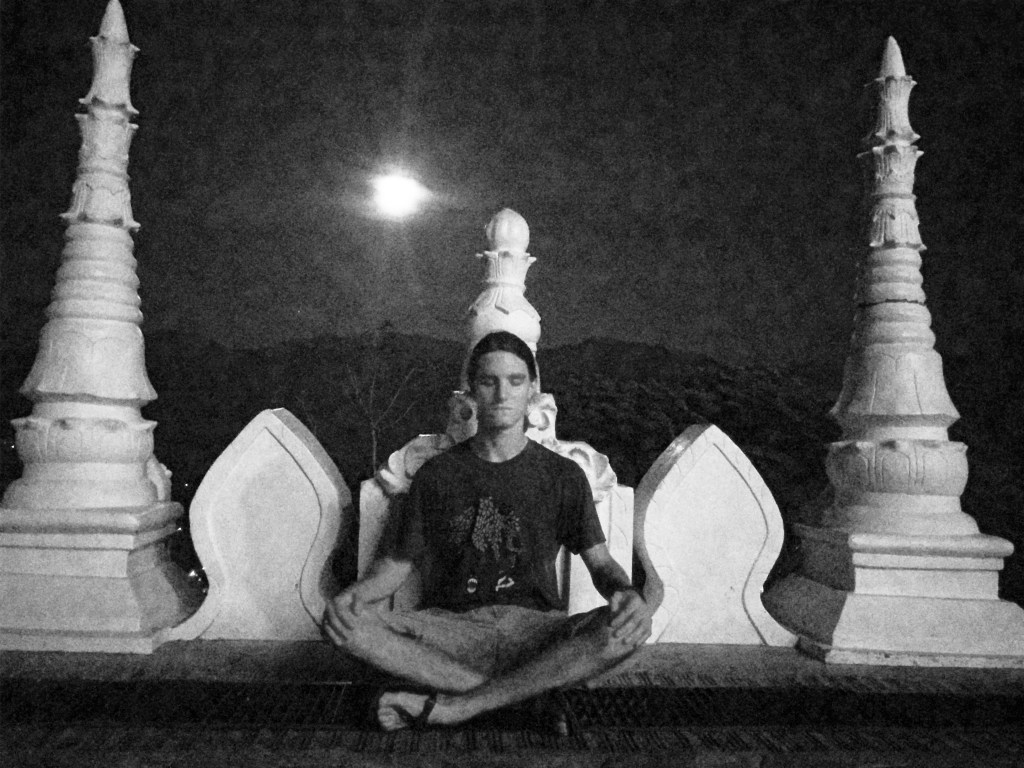
In stillness the mind may begin to complain.. “whens dinner, I have a want, that sound is bothersome.” Calmly abiding with the desires of the mind is a challenging and on going process of mindfulness practice.
The mind going from one state to another, from wild to tame, the uncertainty of the unknown and the desire for the familiar is part of the process. It is a constant process. Internal forces say run away, run free and far from anything that wants to tame you, and that sentiment is so enticing, so romantic, so cinematic and desirable.
There are ancient teachings of many cultures that illuminate the taming of the mind. The culture of the United States has a youngness to it, there is always something in our midst that is willing to encourage a recklessness in a very large way. I see it in myself often, and often I agree, embodying a young rebelliousness. But wisdom is of experience and with the intention of gaining knowledge and wisdom about the wise way, wildness can be approached mindfully. Watching every step of being out of control is a massive learning experience.
The pressure of receiving wisdom from a religious context is difficult to process, especially if one has identified as atheistic or anti-religious. But there is a way things are, the universe works in its way, and humans are a part of that. As far as I know, no humans exist outside the way the universe is. If the spark of inspiration comes from a religious text, then let it be so. Perhaps it will lead to wisdom.
As both the Buddha and Jesus taught, it is the experience, not the inherited system of religion or state, or even scientific thought that leads one further into their own unfolding. The universe provides opportunity, and often it wears a challenging disguise.
The intention of being a mindful person, not a holy, perfect person but a mindful person, who watches themselves as they go, is important. Part of taming the mind is being more open to where the lesson is coming from. The universe seems to prefer a bit of trickery, especially when one claims to have figured something out.
“Its not that, its only this” is often cosmically retorted with , “Well here you go, here is ‘that’ in ‘this’ clothing, are you aware now?”.


Is this a Teacher? A Teaching? Crazy Wisdom? The teacher of taming the mind would never act crazy would they?
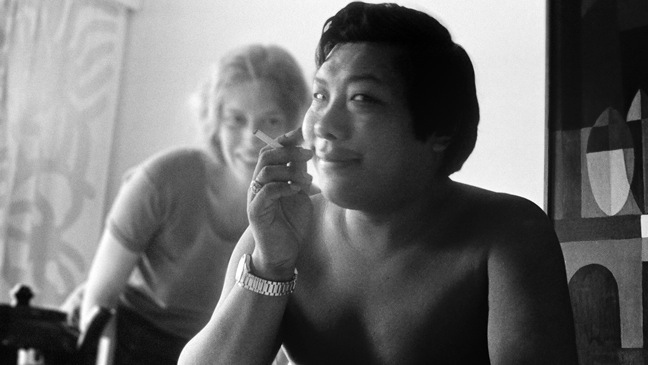
With blinders on due to “knowing”, one may miss the teaching, because the teacher was not what was expected or was of the wrong group or belief. A wise teacher with a tame mind meets crazy at crazy, they meet the student where they are at. Like a monk smoking a cigarette, a certain amount of approach-ability arises.
“He’s venerable, and he is smoking in public, almost making a show of it…” “I smoke, i’m not a monk, i’m crazy, hes being crazy, hes being like me.. “
Now there is a common ground for a greater teaching to occur. The students mind more open to the teaching and the monk, practiced in taming mind, continues on his path.
True story from our experience in Thailand…
Crazy or tame may be the delivery of the teaching. The quality of mind exemplified by restraint, by the taming of the mind, is self evident in the teacher.
“Look at wise Buddha upon his seat, so wise is he…”
“…Oh yeah, well I knew him when he was running through the forest naked, fleeing other humans, and eating the dung of suckling calfs!”
True story from the Buddha’s Middle Length Discounitedurse….
Without being to bold, one might say the only way to tame the mind is by passing through the crazy, through the wild, experience being the truest teacher.
Desire arises in stillness, all the way through desire is the continual path, the continual practice of taming the mind.
Universal wisdom is something that humans respond to and admire. Cross culturally, through boundaries of race and ethnicity, across boarders and beliefs, knowledge is gained through experience. Wisdom seems to cultivate in stillness and meaningful reflection. Stillness is a practice of defiance, defying desire, one encounters the crazy, the wild and the tamed mind. With a continued practice of awareness and meditation, one generates a familiarity with resilience, regardless of what state of mind they may encounter.


A very young and formal Chogyam Trungpa Rinpoche
He was also kinda like this